Expert Wall Modifications for Open, Functional Living Spaces
When your home's interior layout no longer fits your lifestyle, wall modifications transform cramped, compartmentalized spaces into open, flowing environments that enhance functionality and value. Gunite Construction & Rnvtn has provided trusted structural wall modification services for 35 years, safely removing or relocating walls—including load-bearing walls—to create the open concept layouts today's homeowners desire. Our state-certified general contractors understand structural engineering requirements, ensuring your wall modifications maintain your home's structural integrity while creating beautiful, functional spaces that protect your investment and your family's safety.
When Interior Layouts No Longer Serve Your Needs
Our proven process
We've streamlined our approach to deliver exceptional results efficiently and transparently
Quality in every service
- Licensed and qualified specialists
- Complete warranty for all services
- Affordable prices for any budget
Causes of Inadequate Interior Layouts

Why Choose Gunite Construction As A Trusted General Contractor
As a family-owned and operated general contractor with 35 years of continuous service, we bring unmatched regional knowledge and construction expertise to every project.
- Local company with years of experience
- State-certified, fully licensed and insured
- Expert knowledge of soil conditions and coastal construction challenges
Our Wall Modification Solutions
Engineering Options Ensuring Safety and Long-Term Performance
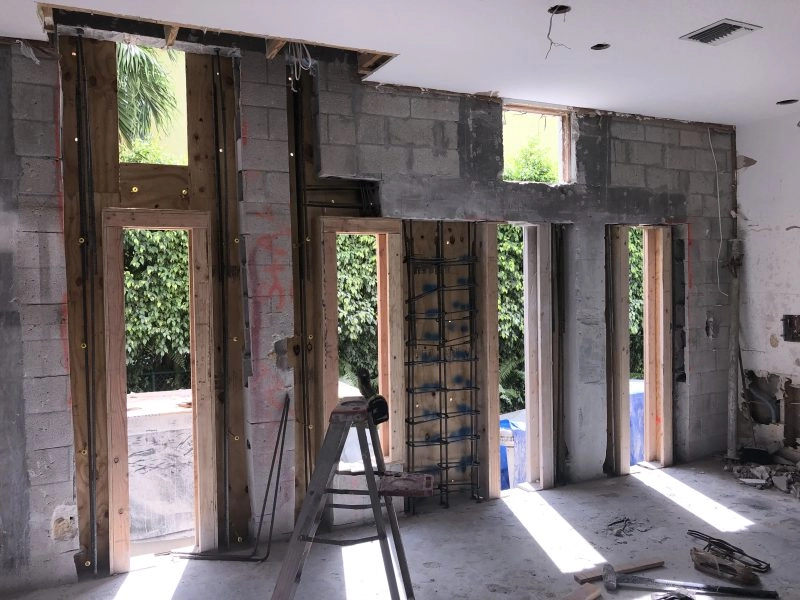
Removing load-bearing walls requires replacing their support function with engineered systems capable of carrying equivalent loads safely across new openings. Understanding support options and engineering requirements helps homeowners appreciate the structural complexity distinguishing professional wall modifications from dangerous amateur attempts. Our structural repair contractors experience ensures optimal solutions considering your home’s construction, required spans, budget parameters, and desired finished aesthetics.
Engineered Beam Selection and Sizing
Proper beam selection depends on span length, loads from above, available installation space, and budget considerations. Laminated veneer lumber (LVL) beams work excellently for residential loads across moderate spans up to 20-25 feet, cost less than steel, install more easily, and simplify connections to wood framing. Steel beams carry heavier loads across longer spans but require equipment for installation, special connection details, and cost considerably more. Glulam beams offer attractive exposed options for situations where beams will remain visible as architectural features. We size beams conservatively through careful engineering calculations, ensuring adequate capacity with appropriate safety factors providing peace of mind and preventing future structural problems.
Flush Beam vs. Exposed Beam Installation Methods
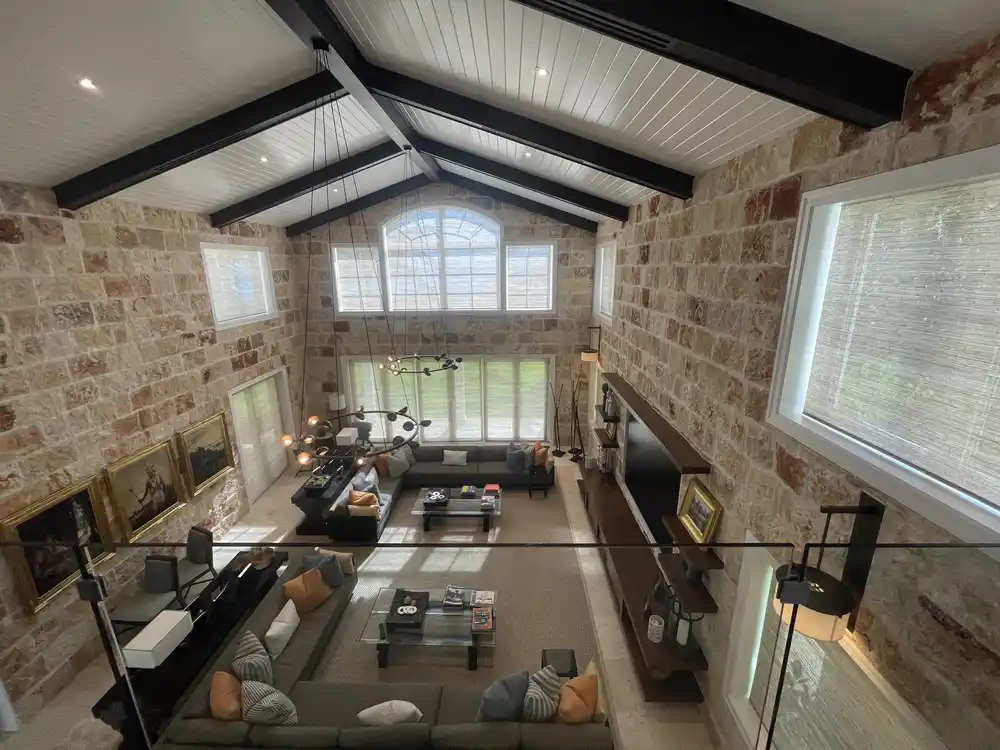
Flush beam installation places beams within ceiling joist depth, maintaining consistent ceiling heights and creating clean, uninterrupted ceiling planes. This approach typically requires lowering joists onto beam tops using joist hangers, may necessitate minor ceiling modifications in adjacent areas, and delivers seamless results where beams remain invisible. Exposed beams extend below ceiling lines, creating visible structural elements that might be boxed with drywall or left exposed as rustic or industrial design features. Exposed installation simplifies construction, reduces costs, but reduces ceiling height below beams. We discuss these trade-offs during planning, helping you choose approaches balancing aesthetics, ceiling height concerns, budget parameters, and installation complexity.
Support Column Requirements and Placement
Very long spans or situations with limited beam depth sometimes require intermediate support columns reducing spans and allowing smaller, less expensive beams. Columns bearing on basement floors, crawl space foundations, or lower-level walls transfer loads through your home’s structure to solid foundations. We minimize column requirements through creative engineering when possible, but when necessary optimize placement—locating columns at natural room boundaries, incorporating them into cabinetry or built-ins, or designing them as architectural features rather than obstructions. Proper column installation includes adequate footings distributing loads appropriately, preventing concentrated loads that could cause foundation settlement repair needs later.
Temporary Support Systems During Construction
Before removing any load-bearing wall, we install comprehensive temporary support systems preventing settlement or structural damage during construction. This critical phase involves erecting temporary wall structures near existing walls, using adjustable columns or screw jacks gradually transferring loads from walls to temporary supports, and maintaining support throughout wall removal and permanent beam installation. Proper temporary support represents one of the most critical aspects distinguishing professional structural repair contractors from inexperienced builders. Inadequate temporary support causes immediate or progressive damage requiring expensive foundation structural repair, wall crack repair, and structural corrections—problems entirely preventable through appropriate temporary support.
Foundation Modifications for Adequate Beam Support
Beams require solid bearing points at ends—typically walls, columns, or foundations capable of supporting concentrated loads without settlement. Sometimes existing foundations lack capacity for loads from new beams, requiring foundation reinforcement before beam installation proceeds safely. This might include foundation underpinning with helical piers or push piers increasing bearing capacity, new concrete piers extending to appropriate depth for soil conditions, spread footings distributing loads over larger areas, or reinforced concrete pads below support columns. Our structural assessment identifies these requirements during planning, incorporating necessary foundation work into project scope ensuring adequate support for permanent installations.
Coordination with Mechanical System Rerouting
Walls often contain electrical wiring, plumbing pipes, HVAC ducts, or gas lines requiring rerouting when walls are removed. We coordinate licensed electricians relocating circuits and outlets to new locations maintaining code-compliant spacing, plumbers rerouting supply lines or drain pipes affected by wall removal while maintaining proper slopes and support, and HVAC contractors modifying ductwork ensuring proper air distribution throughout modified spaces. This coordination happens during planning, identifying optimal new locations that maintain functionality while meeting all code requirements. Proper mechanical coordination prevents situations where wall modifications succeed structurally but compromise essential building systems.
Awards & Recognition
Trusted by thousands of clients and recognized by industry leaders for excellence in service and innovation.







What people say about our services

Laura Watts
Reasonable price
Gunite Construction has been our go-to contractor for both small and large projects, from remodeling to building houses. Their exceptional work is highly recommended.
Services: Remodeling, Drywall installation

Matthew Anthony
Great priceGunite Construction handled a rehab on our condo, they made themselves available for an emergency situation handled the work professionally and charged an extremely fair price. Would highly recommend to anyone for construction needs.

Rodrigo Morales
Great price
This company resolved many issues I had after buying my old house, which needed patio repaving and a wall repair. They were very honest and fast with their work. I totally recommend them to anyone who needs a company that truly knows how to do their job well.
Services: Remodeling, Drywall installation

Henry Watkins
Reasonable price
Ran by some of the most hardworking, honest, and trustworthy people. Great company to work with !
Services: Remodeling
Our Advantages
- Clear timeline and deadlines
- Modern equipment and technology
- Transparent pricing with no hidden fees
Frequently Asked Questions
How do I know if a wall is load-bearing?
Determining load-bearing status requires professional assessment examining your home's framing system from attics or crawl spaces to identify load transfer paths. Walls perpendicular to floor joists or roof rafters, walls near home centers, walls continuing through multiple floors in consistent locations, and walls supporting visible framing members above typically carry structural loads. Our free consultation includes comprehensive structural assessment identifying definitively which walls are load-bearing, quantifying loads requiring support, and explaining structural requirements for your specific modification goals. Never attempt removing walls without professional evaluation—inadequate support causes serious structural damage requiring expensive foundation structural repair and corrections.
How long do wall modification projects take?
Timeline depends on project complexity and scope. Simple non-load-bearing partition wall removal completes in 3-5 days including permitting, demolition, mechanical rerouting, and finishing. Load-bearing wall modifications require 1-2 weeks for permitting and engineering, 2-3 days for temporary support installation and beam placement, plus 3-5 days for finishing work—total 2-3 weeks typically. Multiple walls or extensive modifications involving complex mechanical rerouting extend timelines proportionally. Weather doesn't affect interior wall modifications, though permit approval times vary by jurisdiction. We provide realistic schedules during planning and maintain communication if circumstances affect timeline expectations.
Do wall modifications require building permits?
Yes, wall modifications typically require building permits regardless of whether walls are load-bearing. Permits confirm work meets structural codes, electrical and plumbing installations comply with safety standards, and modifications don't compromise your home's structural integrity. Load-bearing wall removal always requires permits including structural engineering documentation and calculations. Most jurisdictions require permits even for non-load-bearing walls if modifications affect mechanical systems or alter your home's footprint. Our structural repair contractors handle complete permitting—preparing required documents, submitting to building departments, coordinating inspections throughout construction, and ensuring compliance protecting your investment and preventing serious problems during future home sales.
Can I remove a load-bearing wall myself?
No, absolutely not. Load-bearing wall removal requires professional structural engineering determining appropriate beam sizes through load calculations, proper temporary support preventing damage during construction, specialized tools and equipment for safe installation, and skilled execution ensuring safe load transfer to permanent support systems. DIY attempts risk catastrophic structural collapse causing serious injury or death, progressive structural damage from inadequate support requiring expensive foundation settlement repair and corrections, insurance claim denials for damage from unpermitted structural work, and serious problems when selling as unpermitted structural modifications must be disclosed and often prevent mortgage approval. Professional residential structural repair protects your family's safety and your property investment.
Will removing walls affect my home's structural integrity?
When performed professionally with proper engineering and installation, wall modifications maintain full structural integrity while dramatically improving functionality. Engineered beams replace walls' support functions, carrying equivalent or greater loads than original walls across new openings. Proper beam sizing with appropriate safety factors, adequate support at bearing points with sufficient load capacity, correct connection methods using specified fasteners and hangers, and professional installation following engineering specifications ensure modified structures perform safely under all anticipated loads including roof weight, upper floors, contents, and environmental loads from wind and potential snow. Our structural repair contractors expertise ensures wall modifications enhance your home without compromising structural safety—backed by engineering documentation, building department approvals, and comprehensive warranties.
How do wall modifications affect HVAC systems?
Wall modifications removing barriers between spaces can significantly affect heating and cooling patterns, potentially creating hot or cold spots if HVAC systems aren't adjusted appropriately. Open floor plans create larger spaces requiring adequate airflow for comfort, sometimes necessitating additional supply registers or return air grilles ensuring proper air circulation. Walls often contain HVAC ducts requiring rerouting when removed. We assess HVAC implications during planning, coordinating with licensed HVAC contractors to modify ductwork maintaining proper air distribution, add registers or returns if necessary for comfortable conditioning of modified spaces, and ensure your existing system has adequate capacity for reconfigured floor plans. Sometimes system upgrades or zoning modifications improve comfort in open concepts.
What warranty do you provide on wall modifications?
Gunite Construction & Rnvtn provides comprehensive warranties on all structural wall services and modifications. Structural beam installations and load-bearing wall modifications carry 10-year warranties covering materials and workmanship related to structural performance. General construction work including finishing, mechanical installations, and non-structural modifications receives 5-year workmanship warranties. Our structural engineering documentation, building department inspection approvals, and 35 years as state-certified general contractors back these warranties, ensuring you're protected long after wall modifications complete. We provide complete documentation at project completion including engineering calculations, permit records, inspection approvals, and warranty information for your records and future reference.
Serving Communities Throughout South Florida
- Cooper City
- Dania Beach
- Davie
- Fort Lauderdale
- Hollywood
- Lauderhill
- Miramar
- Pembroke Pines
- Plantation
- Southwest Ranches
- Sunrise
- Weston
Projects gallery